Overview
The broader aim of our research is to bridge the gap between data generation, analytical methods, and real-world public health impact.
We work at the intersection of genomic epidemiology, population genetics, and computational modelling. By integrating molecular (genomics and serology) and epidemiological data, we generate high-resolution insights into transmission dynamics, from population genetic and evolutionary processes to outbreak reconstruction and genomic-informed surveillance. We combine methodological innovation, open-source tool development, and applied research in close partnership with global collaborators. Our applied work spans malaria and other vector-borne pathogens, with a focus on methods that are accessible and relevant to public health.
Research areas
Understanding pathogen transmission and infection dynamics
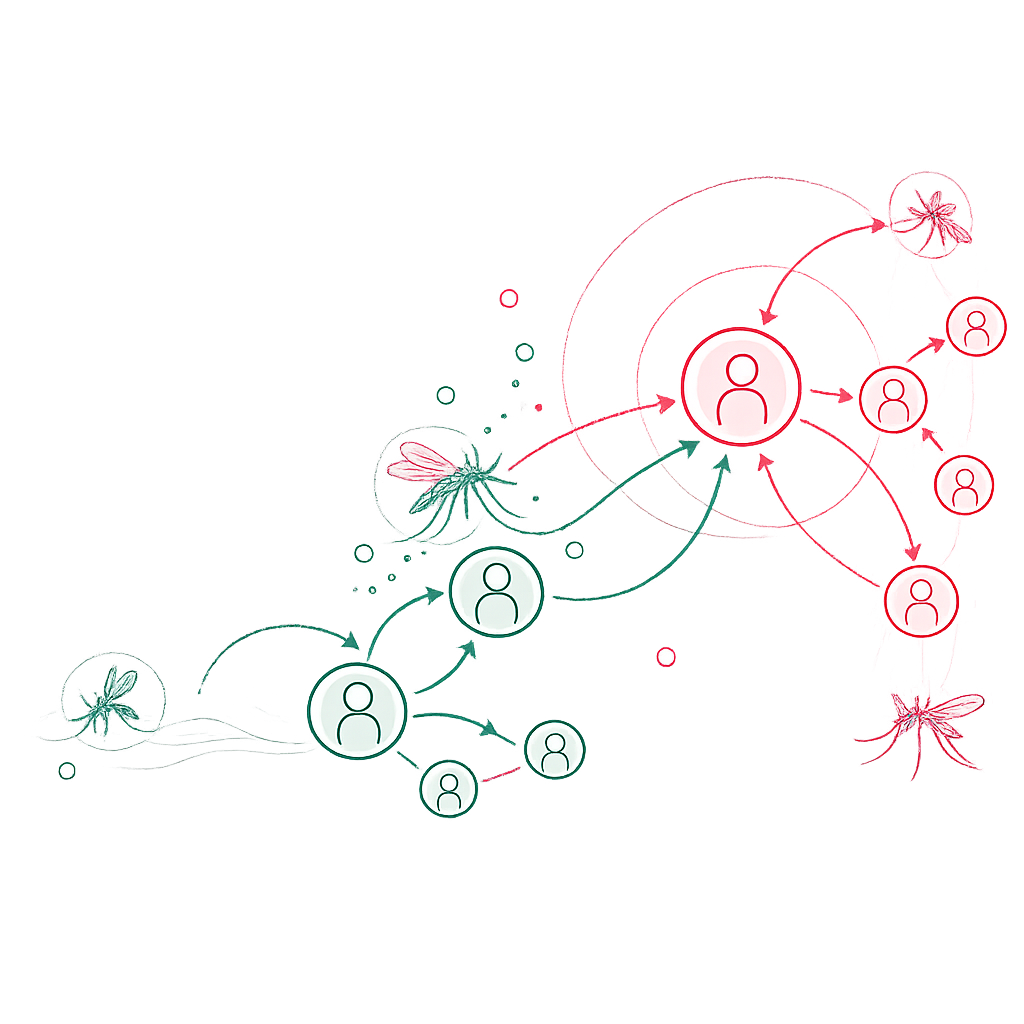
We develop analytical and computational approaches to understand how pathogens spread, persist, and resurge across populations. A central goal of this work is to identify the processes that drive transmission, persistence, and recurrent infection.
Our work focuses on:
- Drivers of outbreaks and resurgence (example paper: Ruybal-Pesántez et al 2023)
- Methods for assessing cross-border transmission risk and malaria resurgence, including inference of transmission chains (see more details, actively recruiting a postdoc for this project!)
- Infection dynamics, including recurrence and relapse (e.g., Plasmodium vivax) (example paper: Rosado et al 2026)
- Understanding the genetics of P. vivax hypnozoite relapses using genomic-epi computational models
Emerging projects:
- Malaria genetic simulators capturing antigenic diversity genetic signals
- Modelling Oropouche and Dengue virus dynamics in Ecuador and Peru
This research combines genomic epidemiology, population genetics, and modelling to uncover the processes shaping pathogen transmission and persistence.
Open-source tools and informing public health policy
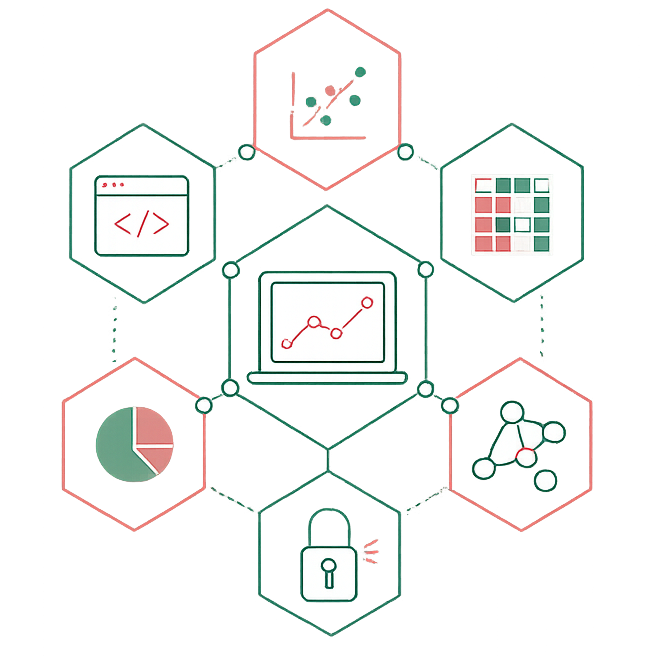
We believe in open science and focus on developing open-source tools, analytical frameworks, and resources to support genomic and computational epidemiology. A key goal of this work is to make methods reproducible, accessible, and useful for public health practice.
Key areas include:
- Development of analytical frameworks for genomic epidemiology, transmission inference and simulation (example paper: Ruybal-Pesántez et al 2025)
- Open-source software and pipelines (e.g., PGEforge. See other software here)
- Decision support tools to support public health decision-making (e.g. DRpower pfhrp2/3 planner)
- Training, best practices, and in-country workshops (example workshop: Malaria molecular surveillance study design workshop)
Emerging projects:
- Seroanalytics approaches and tools, focusing on multiplex serology data
- Cost-effectiveness of malaria genomic surveillance
Enhancing pathogen surveillance approaches
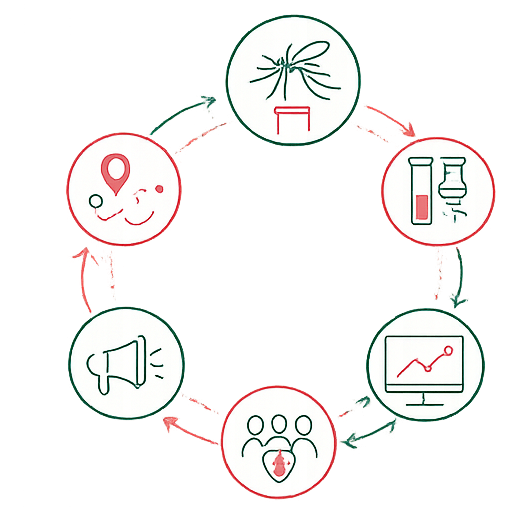 We work to improve how molecular and epidemiological data are used for infectious disease surveillance. Alongside research, we support training and capacity strengthening to help advance the use of genomic epidemiology in public health practice.
This includes:
- Molecular markers and genomic epidemiology approaches for malaria surveillance (example paper: Ruybal-Pesántez et al 2024)
- New methods for serological and genomic surveillance (example papers: Tonkin-Hill et al 2021, Day et al 2025)
- Equitable and collaborative partnership-based approaches to infectious disease research (example paper: Dori et al 2025. We highly recommend the wonderful textbook Transforming Global Health Partnerships: Critical Reflections and Visions of Equity at the Research-Practice Interface where this chapter is published in)
Emerging projects:
- AI and deep learning for malaria importation classification
- Multi-pathogen and integrated surveillance systems, including febrile illness and wastewater surveillance approaches (see the IDMAPP-LATAM consortium)